Free Consultations | Available 24 / 7
 262-232-6699
711 W. Moreland Blvd. Suite 100,
Waukesha, WI 53188

How To Negotiate Alimony in Your Wisconsin Divorce
 Wisconsin courts still encourage negotiation and settlement in divorce cases, including disputes about alimony. In Wisconsin, alimony is negotiable, and many divorces resolve maintenance through agreement rather than a judge’s decision. Understanding how the law works helps you take part in those discussions with more confidence.
You might be surprised to learn that you have more control over alimony decisions than you think. Our Muskego, WI divorce lawyers can help explain how maintenance works and how negotiation usually happens.
What Is Alimony in Wisconsin?
Wisconsin uses the term maintenance instead of alimony. Maintenance is financial support paid by one spouse to the other after divorce. The purpose is to help both spouses reach a reasonable level of financial stability.
Maintenance is governed by Wisconsin Statutes § 767.56. This law lists the factors courts consider when deciding whether maintenance should be awarded and how long it should last.
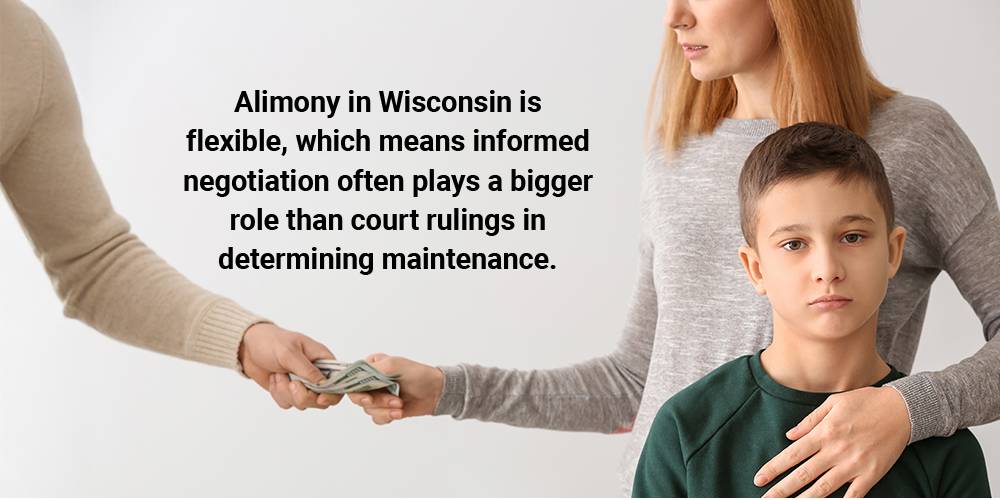
Wisconsin does not use a strict formula. There is no set number or guaranteed outcome. This is why negotiation plays such an important role.
What Factors Shape Alimony Negotiations in Wisconsin?
The factors listed under § 767.56 are used by Wisconsin courts when deciding maintenance, but they also shape how spouses negotiate support outside of court. Understanding them can help you set realistic expectations about the amount and length of maintenance that may be discussed. When both sides focus on these factors, negotiations are more likely to stay practical and productive. The factors include:
-
How long the marriage lasted
-
Each spouse’s age and health
-
Each spouse’s income and ability to earn
-
The standard of living during the marriage
-
Each spouse’s contributions, including child care and homemaking
When Does Maintenance Come Up in a Wisconsin Divorce?
Maintenance is usually discussed when there is a gap in income or earning ability. This often happens when one spouse earns much more than the other or when one spouse stays home to raise children. In other cases, one spouse may need time to finish school or get job training. Maintenance is meant to support that transition.
Why Negotiation Is So Important for Alimony in Wisconsin
Negotiation allows you to shape the terms instead of leaving everything to the court. It can also reduce stress, cost, and time spent in the divorce process. Because Wisconsin law allows flexibility, negotiation often leads to better outcomes. Judges give guidance, but they also respect reasonable agreements made by both spouses. When people negotiate, they can focus on real-life needs instead of rigid rules.
How the Length of the Marriage Affects Negotiation
The length of the marriage often sets expectations. Long marriages are more likely to involve longer maintenance periods. Shorter marriages may involve short-term or temporary maintenance. In negotiation, this factor helps narrow the range of possible outcomes early on.
How Income and Earning Ability Are Factored in Wisconsin Maintenance Decisions
Income matters in an alimony case, but it is not the only issue. Courts and negotiators also look at earning capacity. This means what a person can reasonably earn in the future.
If one spouse earns less because they left the workforce, negotiations may focus on temporary support. This allows time to return to work or gain skills. During this period, maintenance may be structured to decrease as income increases. This approach helps balance support with long-term independence. Clear income records are important in these discussions.
What Types of Alimony Agreements Can Be Negotiated?
Wisconsin law allows spouses to agree on different ways to structure maintenance, as long as the terms are fair. Common negotiated options include:
-
Temporary maintenance for a specific period
-
Maintenance that gradually decreases over time
-
Maintenance tied to job training or education goals
-
An agreement to waive maintenance in exchange for other terms
The best structure depends on each person’s financial needs, future plans, and overall goals after divorce.
Can Maintenance Be Negotiated Along With Other Issues?
Maintenance is often negotiated as part of a full settlement. For example, one couple may decide on a smaller amount of maintenance in exchange for more marital property. Another may agree to shorter maintenance to avoid prolonged conflict.
These trade-offs should be considered carefully. Maintenance and property division serve different purposes under Wisconsin law. Your attorney will guide you through the process to ensure that your settlement is as fair as possible.
How Do Taxes Affect Alimony Discussions in Wisconsin?
Tax rules affect how maintenance works in real life. As of 2025, maintenance payments are not deductible for the person paying them and are not counted as taxable income for the person receiving them. This means the full payment comes from the payer’s after-tax income. Because of this, negotiations often focus on monthly budgets, take-home pay, and whether the payment amount is realistic over time.
How Mediation Helps With Alimony Negotiation in Wisconsin
Many Wisconsin divorces are resolved through mediation. Mediation uses a neutral third party who helps guide discussions and keep conversations focused. It encourages open communication and problem-solving instead of conflict. Because decisions are made outside the courtroom, spouses often have more flexibility, which can lead to agreements that last longer and better fit their needs.
What Information Helps During Alimony Negotiation?
Clear financial and personal information helps both sides understand what support may be reasonable and sustainable. Having this information ready can also prevent delays and reduce misunderstandings. Helpful information often includes:
-
Recent pay stubs and tax returns
-
Employment history and resumes
-
Monthly expense lists
-
Health or education records that affect earning ability
Can Alimony Agreements Be Changed Later?
Wisconsin sometimes allows maintenance to be modified when there is a significant change in circumstances. This might include a major change in income or health. However, some divorce agreements limit or waive future changes. Because of this, it is important to think about long-term needs during negotiation. A maintenance agreement should be workable both now and in the years ahead.
Schedule a Free Consultation With Our Waukesha County, WI Alimony Attorneys
At Bucher, Wolff & Sonderhouse, LLP, we help clients understand maintenance and prepare for productive negotiations. If you have questions about alimony or want help planning your approach, call 262-232-6699 to schedule your free consultation with our Muskego, WI divorce lawyers. We are available seven days a week, 24 hours a day.











Contact Our Firm
 The use of the Internet or this form for communication with the firm or any individual member of the firm does not establish an attorney-client relationship. Confidential or time-sensitive information should not be sent through this form.
I have read and understand the Disclaimer and Privacy Policy.